

Grande Vegas casino Plinko game
Introduction
When I look at Grande vegas casino Plinko, I see a format that is easy to understand in seconds but much harder to judge correctly over a real session. That contrast is exactly why Plinko keeps drawing attention. On the surface, it is one of the simplest games for Canadian players you can open: you choose a stake, select a risk level, drop a ball, and watch it bounce through a field of pins into a payout slot. In practice, though, the experience can shift sharply depending on settings, bankroll discipline, and expectations.
For Canadian players browsing Grande vegas casino, Plinko stands out because it removes the dense structure of classic slots and replaces it with something more immediate. There are no paylines to study, no symbols to memorize, and no bonus page for active Grande Vegas Casino players map to decode. The appeal comes from visible randomness, fast rounds, and the tension of seeing a result unfold in front of you rather than appear all at once. That makes it accessible, but not necessarily gentle.
In this review, I want to stay focused on the game itself: how Plinko works, why its rhythm feels different from slots and blackjack checklist, where the real risk sits, and what a player should understand before pressing start. If you want to know whether Grande vegas casino Plinko is worth trying, this is the practical picture.
What Plinko is and why it attracts so much attention
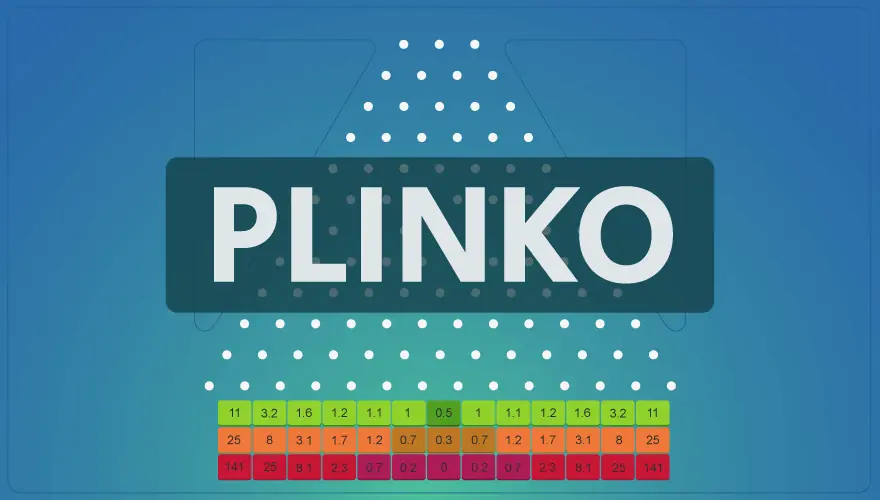
Plinko is a drop-based chance game built around a very clear visual idea. A ball falls from the top of the board, touches a series of pegs on the way down, and lands in one of several prize slots at the bottom. Each slot carries a multiplier. Most of the time, the ball lands near the center where lower multipliers are concentrated. The highest returns usually sit on the edges, where the ball reaches less often.
That sounds almost too simple, and that is part of the reason it works. Many casino products ask the player to trust hidden calculations. Plinko still runs on random number generation, of course, but it presents the outcome through movement. You can follow the bounce path, anticipate an edge drop, and feel the tension build before the multiplier is known with certainty. It gives randomness a physical-looking form.
There is another reason the format has become so noticeable. Plinko compresses suspense into a very short cycle. A slot spin may involve reels, line checks, cascades, and bonus triggers. Plinko gives you a single event with a clean beginning and end. That makes it easy to repeat. It also makes losing streaks feel faster than some players expect.
One observation I keep coming back to is this: Plinko does not hide its personality behind decoration. It is not trying to distract you with theme, soundtrack, or story. The whole product is the drop itself. If that core moment excites you, the game can be compelling. If it does not, no amount of visual polish will change your mind.
How the Plinko system actually works at Grande vegas casino
At Grande vegas casino, the basic structure of Plinko follows the familiar model seen across modern online platforms. Before each round, the player usually adjusts three main variables: stake size, board setup or row count if available, and risk level. Once those settings are locked in, the ball is released from the top of the field and begins its descent.
The movement looks organic, but the result is still governed by the game engine. The pegs create the visual path, while the underlying mathematics determines how often each payout zone is reached over time. This distinction matters. The bounce pattern can make each drop feel unique, yet the long-run distribution remains anchored to the game’s RTP model and volatility profile.
In practical terms, here is what each common setting tends to change:
| Setting | What it changes | What it means in a real session |
|---|---|---|
| Stake | The amount attached to each drop | Higher stakes raise both recovery potential and loss speed |
| Risk level | The spread of multipliers across the board | Low risk usually gives steadier small returns; high risk reduces hit comfort and chases rare top outcomes |
| Rows / board depth | The number of deflections before landing | More rows can widen the emotional gap between common and rare results |
| Auto-play | Speed and repetition of drops | Convenient, but it can make bankroll erosion feel almost invisible until it is too late |
The central logic is simple: the more ambitious the payout map, the less forgiving the session tends to become. Players often underestimate this because the interface remains clean and almost playful. But the board can move from relatively mild to sharply swingy with just one change in the risk selector.
That is where the game starts to reveal its real identity. Plinko is not just about watching a ball bounce. It is about choosing what kind of statistical pain you are willing to tolerate in exchange for a shot at larger multipliers.
Why the pace feels so different from slots and other casino games
The rhythm of Plinko is one of its strongest hooks. A round is short, the input is minimal, and the result is delivered in a way that feels active rather than passive. You are not waiting through a complex animation cycle. You are tracking a single object in motion. This creates a sharp loop of anticipation, release, and reset.
At Grandevegas casino, that pace can be either a strength or a problem depending on how you play. If you enjoy quick decision cycles and visible outcomes, Plinko feels efficient. If you prefer slower games with more room to think between results, it can become intense very quickly.
There is also a subtle psychological effect here. In slots, a losing spin is often absorbed into the broader spectacle of symbols, lines, and near-misses. In Plinko, the loss is stripped down. The ball falls, lands low, and the round is over. That directness makes the game feel honest, but it can also make a cold run feel harsher.
A second memorable observation: Plinko often feels calmer than it really is. The design is simple, the board is tidy, and the action looks almost harmless. Yet the session speed can be aggressive, especially when auto-play is active. It is one of those games where visual simplicity can mask financial intensity.
Risk levels, probability patterns, and what players need to understand
If I had to identify the single most important thing a player should understand before trying Grande vegas casino Plinko, it would be this: risk level changes the emotional character of the game more than the interface suggests.
Low-risk mode usually compresses the payout table. You will often see more modest multipliers and fewer dramatic swings. That does not mean steady profit; it simply means the session may feel less violent. Medium risk tends to open the spread and create a more mixed experience. High risk pushes the board toward long stretches of low-end landings with the possibility of a rare, outsized hit. Mobile players should have a look at Grande Vegas Casino bonus terms wagering and promo details before installing anything.
That is not just a matter of preference. It affects bankroll survival, session length, and player perception. Someone entering high-risk Plinko with slot-style expectations may be surprised by how quickly repeated low results stack up. The top multipliers can be attractive, but they are attractive precisely because they are not meant to arrive often.
- Probability is uneven by design. Central slots are usually reached more often than edge slots, which is why the biggest multipliers sit where the ball lands least frequently.
- Short-term outcomes can be misleading. A lucky early hit can create the illusion that the board is generous, while a dry run can make it feel broken. Neither impression tells you much on its own.
- Risk settings reshape variance, not destiny. Switching modes changes distribution patterns, but it does not create a reliable route to control results.
Players sometimes talk about reading the board or sensing a hot side. In practical terms, that is not a sound way to approach Plinko. The visible path is engaging, but it should not be mistaken for a pattern you can exploit consistently. The better approach is to treat the game as a volatility choice: how much instability are you willing to accept for a chance at stronger multipliers?
What a real Plinko session feels like over time
Early rounds often make Plinko feel harmless. The controls are straightforward, the drop animation is short, and the learning curve is almost nonexistent. But after twenty, fifty, or a hundred rounds, the shape of the session becomes clearer. This is where many players either start enjoying the format properly or decide it is not for them. Players who value quick withdrawals will find real timings in Grande Vegas Casino bonus offers guide with key terms and account details.
In lower-risk settings, the experience can feel like repeated small corrections around your bankroll. You may see frequent minor returns that soften the descent without fully stopping it. In higher-risk settings, the session often becomes more binary in mood: long stretches of underwhelming landings interrupted by a sudden spike if the ball reaches a premium slot.
This creates an unusual tension. Plinko can feel both repetitive and suspenseful at the same time. Repetitive, because the action never changes much. Suspenseful, because every drop still carries a visible route to a very different result. That combination explains why some players stay with it much longer than they expected.
The practical takeaway is simple. If you want a game that develops through layers, bonus rounds, and changing states, Plinko may feel too narrow. If you want a format that delivers clean, repeated moments of anticipation without extra structure, it can be exactly right.
How Plinko compares with classic slots and other casino favourites
Plinko sits in an interesting position between slots and pure chance games. Like slots, it is easy to start, built for fast rounds, and driven by a mathematical return model. Unlike slots, it removes almost everything decorative and leaves you with a stripped-down probability event. Compared with real money roulette, dice, or crash-style formats, it offers a more visual and tactile sense of progression during each round.
Here is how the differences look in practical terms:
| Format | Main player experience | Where Plinko differs |
|---|---|---|
| Classic slots | Reels, symbols, features, bonus rounds | Plinko is more direct, faster to read, and less dependent on thematic presentation |
| Roulette | Single outcome tied to a betting layout | Plinko adds visual descent and multiplier mapping instead of table-style wagering |
| Dice games | Immediate numeric result | Plinko turns the result into a visible journey, which changes the emotional feel |
| Crash games | Decision timing and cash-out pressure | Plinko removes the timing decision and focuses entirely on preset variance |
This is why Plinko often appeals to players who are tired of overloaded slot interfaces but still want something more dynamic than a plain number draw. It keeps the session moving without asking you to study a rulebook. At the same time, it lacks the layered reward structure that makes many slot fans stay engaged for longer sessions.
A third observation worth noting: Plinko is one of the few casino formats where the result feels visual first and mathematical second, even though the mathematics still control everything important. That illusion of physicality is a major part of its appeal.
Who Plinko suits best and who may want a different format
I would say Plinko suits players who value immediacy, short rounds, and a transparent-looking outcome path. It can also work well for those who prefer to control session intensity by adjusting risk level rather than learning multiple rule systems. If you like seeing the result develop on screen instead of simply appear, Plinko has a clear advantage.
It may be a weaker fit for players who want strategic depth, extended bonus sequences, or the slower cadence of table play. It can also disappoint anyone who mistakes simplicity for softness. The board looks approachable, but high-risk settings can burn through a balance faster than the interface suggests.
- Plinko may suit you if: you enjoy fast rounds, visible randomness, simple controls, and a format that gets to the point quickly.
- You may prefer another game if: you want narrative themes, feature progression, tactical decisions, or a slower and more deliberate session pace.
For new players, the safest entry point is not the highest multiplier table. It is a modest stake and a lower-risk setup, ideally tested first in demo mode if that option is available. That will not remove uncertainty, but it will help you understand the session rhythm before real money is exposed to sharper swings.
Practical strengths and limitations of Grande vegas casino Plinko
Plinko has genuine strengths, but they are specific. It is not a universal answer for every player profile. At Grande vegas casino, the format works best when approached as a focused, high-clarity chance game rather than as a replacement for all other casino categories.
Main strengths:
- Very low barrier to entry; most players understand the core idea immediately.
- Fast rounds with clear visual feedback.
- Risk settings can meaningfully change the session style.
- The format makes randomness feel visible, which many players find more engaging than abstract outcomes.
Main limitations:
- Repetition can set in quickly because the core action barely changes.
- High-risk modes may create long stretches of unsatisfying results.
- The simple interface can cause players to underestimate bankroll pressure.
- There is little strategic depth beyond stake control and risk selection.
None of these points are minor. The same qualities that make Plinko attractive also define its limits. Speed is exciting, but it increases session intensity. Simplicity is accessible, but it can reduce long-term variety. Large multipliers are appealing, but they exist because the path to them is rare.
What to check before launching a Plinko session
Before opening Grande vegas casino Plinko, I would suggest treating the pre-game setup as part of the decision, not a formality. Because the game starts so quickly, players often skip the one moment where they still have full control.
Here is what matters most before the first drop:
- Look at the risk setting first. It shapes the entire session more than most beginners realize.
- Match stake size to session speed. A small bet can still add up quickly when rounds are short.
- Check whether auto-play is active. Automation can make it easier to lose track of spending.
- Understand what success means for you. Are you testing the format, chasing occasional spikes, or just looking for short entertainment?
- Use demo mode if available. It is one of the easiest ways to understand the board’s rhythm without immediate financial pressure.
This is also the point where expectation management matters. It is built to create repeated moments of uncertainty with different payout distributions depending on your settings. Plinko is not built to provide a steady upward curve. If you go in expecting smooth consistency, the session may feel frustrating. If you understand that the tension comes from uneven outcomes, the design makes more sense.
Final verdict
Grande vegas casino Plinko offers a very specific kind of casino experience: fast, visually clear, low on complexity, and highly dependent on how much variance the player chooses to accept. Its strongest quality is not novelty for its own sake, but clarity. You know what the round is, you see it happen, and you feel the result immediately.
That said, the simplicity of Plinko should not be confused with predictability or safety. The game can feel light at first glance, yet the session dynamics can become demanding, especially in higher-risk modes or when auto-play accelerates the pace. The biggest practical strength is the clean, readable structure. The biggest caution is that this same structure can hide how quickly losses accumulate.
For players in Canada exploring Grande vegas casino, Plinko is worth trying if you want a direct format with visible randomness and short, repeatable rounds. It is less suitable if you prefer layered slots, strategic decision-making, or slower table-style play. In the end, Plinko works best for players who appreciate stripped-back design and understand that behind the simple board sits a very real volatility engine. If you approach it with that awareness, you are far more likely to judge the game fairly and use it in a way that fits your style.
FAQ
How does Plinko work when the ball drops?
A ball drops from the top grid and bounces through pegs until it lands in a scoring slot. The final slot determines the multiplier for that round. Larger multipliers are tied to specific landing zones, so placement in the grid is what matters.
What risk level and multiplier behavior should be expected in Plinko?
Plinko outcomes are based on the round’s landing result, so volatility rises when bigger multipliers appear more rarely. The ladder of multipliers usually spans small to high values, creating short swings and occasional bigger results. A higher bet increases both potential return and the impact of losing streaks.
Where is the Plinko game lobby accessed from on the official casino site?
Open the Games or Casino Games section and select Plinko from the game list. From the game lobby, pressing Play launches the ball-drop board. On Grande Vegas, the Plinko entry is typically grouped with other casino games in the main lobby navigation.
What common beginner mistake leads to confusion in Plinko betting?
Setting a higher bet without keeping track of the multiplier zones is the most frequent issue. Another common mistake is switching between demo mode and real-money play and expecting the same balances or bet settings. A quick check of bet size and selected mode before launching the next ball prevents most problems.